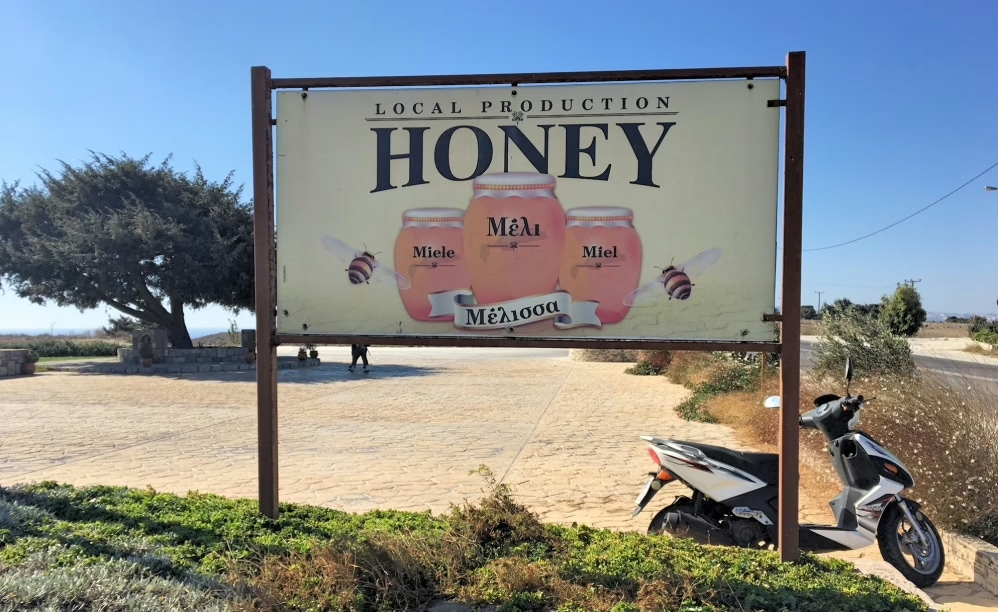
Since 2009, the Melissa beekeeping company has been located in Kefalos, run by Dionisia and her family. The name Melissa is, by the way, Greek and appropriately translates as Bee and Meli is the honey.
How it all began:
Her father started with just two bee hives in 1947 – today there are 650 located on Kos and the neighboring islands. Dionisia places great importance on ensuring that the hives are located as far as possible in pristine nature. The plants in the surrounding area are not treated with pesticides or similar pollutants.
Here's a little bit of honey knowledge:
We have all known honey since childhood, and we have already seen many beehives.
Some people have even been stung by bees, and we know that bees are very important. But how is honey actually produced?
The bees are local to their habitat and remain in the same place as long as they find enough food there; they are also flower-specific, only switching to a different type of flower once they have finished eating the previous one.
Processing in the beehive
In the hive, the bee transfers the nectar to the worker bee, and during multiple transfers of bee to bee, it releases bodily substances, such as
For example, proteins and enzymes. These keep the nectar fresh and prevent the formation of bacteria.
After that, the bees extract the water from the nectar by squeezing it out and sucking it back in. After that, they fan the nectar 😊 with their wings, the hardworking creatures extract the moisture from the hive. The nectar is stored in honeycomb cells and only when the bee covers the hive with a wax cap and it is thus sealed airtight does the beekeeper know that the honey is ready. A bee lives for about 4 weeks and produces just a spoonful of honey in its lifetime.
Production:
In the beekeeping operation, a machine heats the honeycomb plate to about 40 degrees, thus releasing the honey from the plate. After that, the honey is centrifuged and stored in steel tanks for another 2 weeks. During this time, the last wax residues rise to the top while the honey settles at the bottom.
But you never know what kind of honey the bees have collected.
To do this, it is sent to the laboratory for inspection of its components and therefore also its quality.
The family also handles the bottling of the honey, following the motto of the bees:
„Only working together leads to success,“ Dionisia explains to me with a wink.
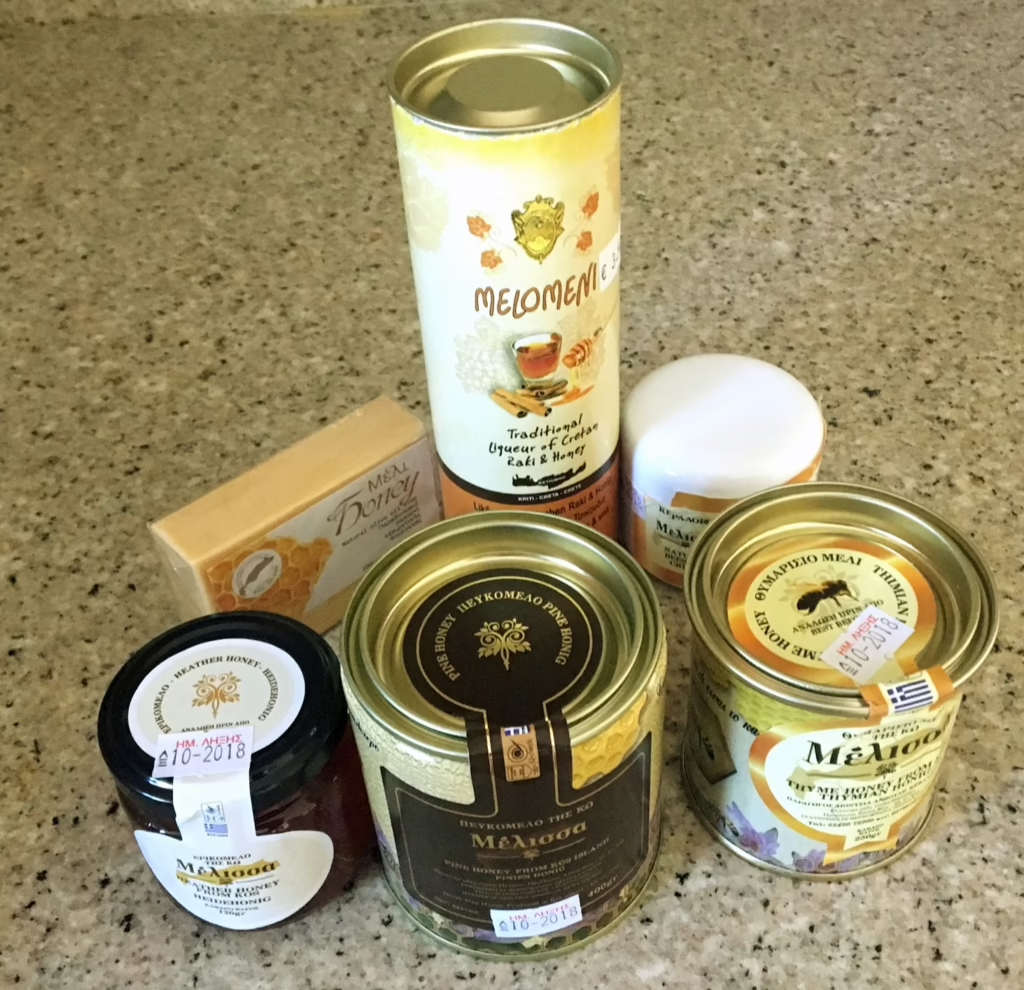
The bees here produce thyme, heather and forest honey.
Honey, a remedy
Honey is very healthy and is said to possess many healing properties. It is packed with vitamins and minerals and protects against bacteria. It reduces the risk of a heart attack and helps with digestive disorders and skin conditions.
In addition, it is a perfect detoxifier:
A glass of water with lemon and honey detoxifies the liver and also removes harmful substances and fat.
The different types of honey are said to have their own unique healing properties:
- Heide honey is said to be good for arthritis, rheumatism and bladder diseases.
- Thyme honey helps with coughs and intestinal problems. According to legend, the ancient Greeks used thyme honey as a cough suppressant.
- Wood honey is particularly good for colds.
For me, it's more rare to have the classic honey bread, more often the Greek version:
Yogurt with honey and in winter tea with honey.
In addition to the honey, Melissa also offers the following products:
Beeswax ointment, beeswax candles, soap, ointment and rakia, flavored with honey. A very delicious schnapps; it tastes a bit like Christmas. It helps with colds, and can also be drunk warm.
I am a big fan of bee balm; you can find it in Germany in the Reformhaus or directly from the beekeeper.
As a child, I used it to help with nasty mosquito bites; in adolescence, it helped with pimples, herpes, rough skin, and other skin inflammations. It really is a miracle remedy.
The apiary also includes a small café and the donkey Melis.
Conclusion: Definitely worth a visit, and some honey lovers have already become fans of Melissa 😉
Thank you very much Dionisia for the nice, entertaining and informative tour.

Opening hours:
April and October: 9:00 a.m. – 6:00 p.m.,
May – September: 9:00 a.m. – 8:00 p.m.
For orders:
info@melissa-kos.com or via Facebook.
However, the shipping costs are quite high. Other local products are Olive oil and Wines the island.