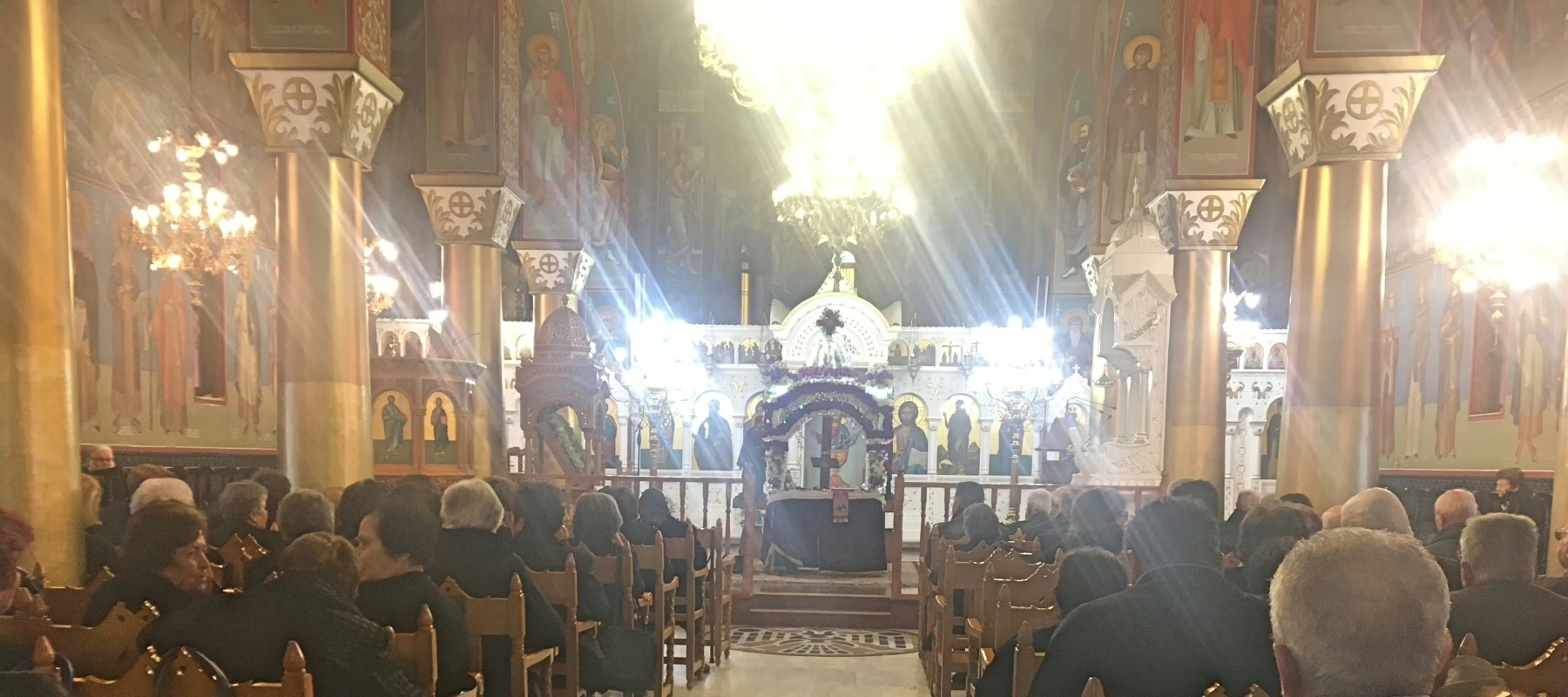
The Greek Orthodox Easter celebration is world-renowned and the most celebrated holiday in Greece.
About the fasting period, which takes place on Kathara deftera begins and some related Recipes I have already published them in articles.
The Orthodox Easter holiday rarely coincides with the European Easter, which is due to the fact that the Orthodox Church follows the Julian calendar, while the Catholic and Evangelical churches follow the Gregorian calendar.
However, one thing is certain: That Greek Easter always takes place on the first Sunday after the first full moon of spring Instead. The Easter celebration begins in the Greek church in Lenten week, in Greek the „Megali Evdoma“, The „Big Week“:
Every evening during Easter there are services:
On Wednesday After the service, churchgoers receive a cotton swab that is dipped in oil. Subsequently, it is used to cross their foreheads and hands.
A significant day is Good Friday, where traditionally The Easter eggs are colored red become, as a symbol of the blood of Jesus.
In the church the twelve Gospels are read, after the sixth the lights in the church go out, and in candlelight one can hear the church bells, which are supposed to symbolize the hammering of the crucifixion. Some of the faithful even spend the night in the church after the service (mainly women). At night and in the morning the church is locked down. Then put the coffin with the flowers decorated.
Good Friday
Good Friday is, like in our country, a very important day in the Greek Easter celebration.
In the morning, a gold-embroidered cloth with the image of the dead Jesus, angels, and Saint Mary is placed on the coffin. In Greek it is called „Epitafios“.
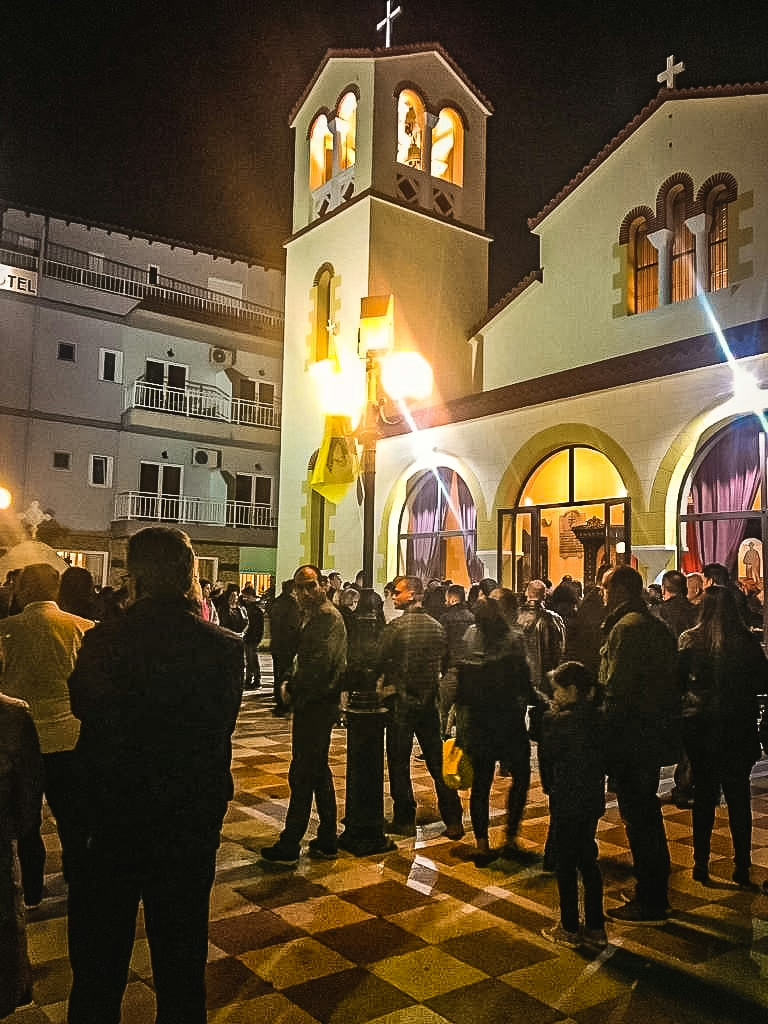
Only a small number of Greeks participate in the worship itself. However, the church square fills up before the church during the worship. After the sermon, it feels as if the entire island is on its feet.
Almost simultaneously, the churchgoers (some of them singing and accompanied by music) of the respective churches get moving, and then proceed to to award the most beautiful „epitaphs“ to the market square.
By going through under the coffin, and thus symbolically bowing, the believer receives the blessing.
There are two services on Easter Saturday:
In the morning, bread and wine are offered as a blessing, and one congratulates one another on the resurrection with the words: Cristos Anesti, Which means: „Christ has risen.“.
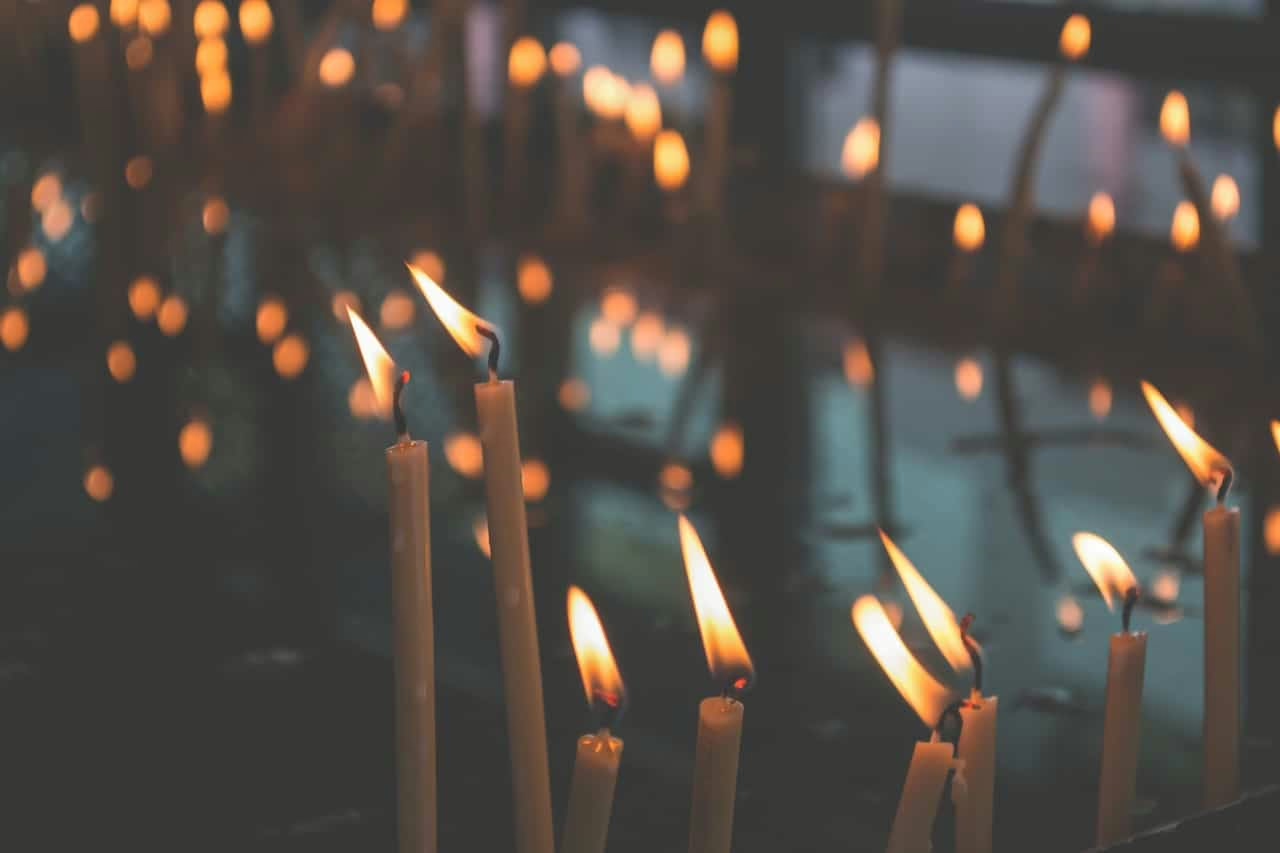
The main service then takes place at 11 PM and the church becomes a meeting place for all residents here as well. At midnight the priest then passes on the sacred Easter light to the visitors. Then the well-known Greek Easter candle comes into play:
These are available to buy everywhere weeks in advance.
For adults, they are classic white long candles, called „lampades“. There are a wide variety of motifs for the children; from kitschy to cute, everything is included.
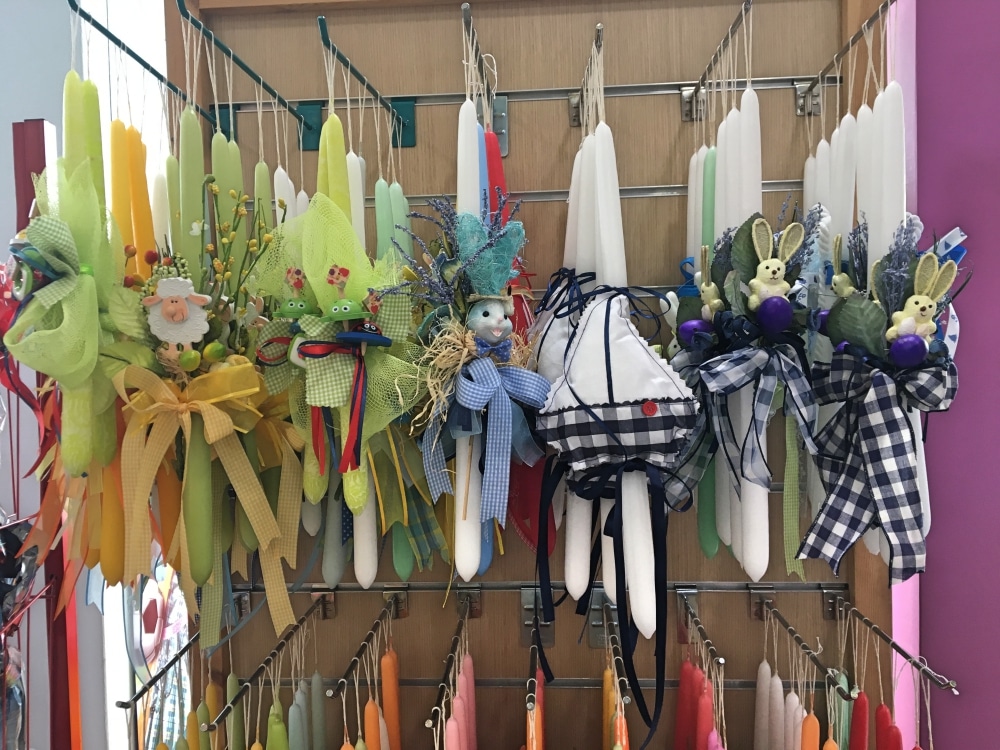
According to tradition, the godparents are responsible for ensuring that the godchild is equipped with a candle by Easter Saturday.
On the way home, everyone holds their burning Easter candle and in fact one should also remain silent until they reach home. Actually –
For my girls, it was always a drama when the candle would go out on the way home – so always – thus we never came home quietly 😉
What I didn't know for a long time was that this Holy light flies directly from Jerusalem to Athens by plane. From there it will either by ships or airplanes passed on to the islands.
From the airport, the sacred light then enters dThe main church of the respective island. From there it is distributed further by the representatives of the various churches.
The resurrection of Jesus is then celebrated with popping firecrackers, almost like on New Year's Eve.
In Kalymnos they still use dynamite; every year there are some injuries there, and the deafening noise can be heard all the way to Kos. Unfortunately, the celebration here too is not limited only to the time after the church service; firecrackers are fired even days in advance.
At home, many people then eat the very famous soup around midnight., Magiritsa, consisting of the internal organs of the lamb: liver, lungs, intestines and heart.
Many tourists love this soup, but most only do so until they are told what is in it. As you might imagine, I don’t eat the soup either.
For that, there is this Easter bread (Tsoureki) and that Easter cake (Koulourakia).
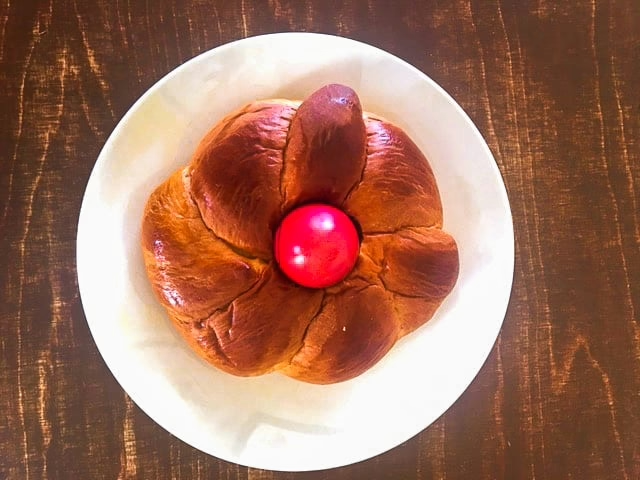
Eine sehr witzige Tradition ist, das gegeneinander Schlagen der rot gefärbten Eier. Dessen Ei standhält, dem prophezeit man Glück für das kommende Jahr.
On Easter Sunday The lamb is then grilled over an open grill and turned by hand.
For me, it’s always a complete horror and everyone in my circle of friends knows that I definitely can’t be available for filming.
For us, church traditions are definitely not the focus during Easter time.
Nevertheless, it is a highlight every year:
The weather is mostly breathtaking and we enjoy it being together with friends and family, Before the stress of the season starts again and you don’t see your friends at all until the end of the season.
Thus, it is always a small goodbye.
It is of course especially beautiful to celebrate the Greek Easter festival when no charter flights have yet landed on the island; working on Easter for the Greeks is just as bad as for the Germans on Christmas. But the Greeks only skip grilling on Sunday in emergencies.
Charter flights are already available on the island, but the start of the season is not really until after Easter.
More about the island in the new Travel guides by me *
Packing list for the holiday in Kos